The Prodigal Son Returns: Vernon Carey Jr.’s Homecoming to Duke
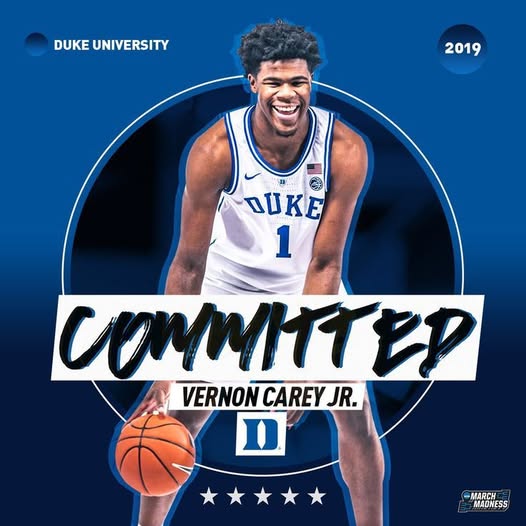
The announcement that Vernon Carey Jr., a former five-star recruit and collegiate standout, will return to Duke University as a graduate transfer marks one of the most compelling narratives in modern college basketball. This is not merely another addition to the transfer portal carousel; it is a profound homecoming, signaling a full-circle moment for a player whose initial chapter in Durham felt decisively unfinished. For Duke, his return provides an immediate infusion of veteran maturity, physical dominance, and championship-level experience that is increasingly rare in the college ranks. For Carey Jr., it represents a final, powerful opportunity to leverage the college stage, solidify his legacy in the iconic deep-blue uniform, and demonstrate the tangible growth he has achieved during his years navigating the demanding currents of professional basketball.
Carey Jr.’s first run with the Blue Devils, during the 2019-2020 season, was a portrait of raw, explosive potential. He quickly established himself as a dominant low-post force, utilizing his imposing frame and soft touch around the rim to average nearly seventeen points and nine rebounds per game. He was an imposing physical presence, often overpowering opponents and earning consensus All-American honors and the ACC Rookie of the Year award. However, that season was cut prematurely short by the unprecedented cancellation of the NCAA Tournament due to the emerging global pandemic, leaving both the team and Carey Jr. himself with a nagging sense of missed opportunity. He declared for the NBA draft, moving on to the next phase of his career, but the envisioned postseason run and the chase for a national title remained an aspiration, not a reality. This lingering sense of unfulfilled promise is precisely what imbues his graduate transfer with such powerful emotional and strategic weight—he is returning to complete the mission that fate had interrupted five years prior.
His intervening years spent in the NBA and, more frequently, the G League, have been vital in transforming the young collegiate star into a battle-tested professional. While he did not secure a permanent, starring role in the league, the experience of constant travel, rigorous training schedules, and exposure to elite coaching has served as an advanced developmental crucible. The G League, in particular, is an environment defined by relentless effort, high-stakes competition for roster spots, and the necessity of adapting one’s game to fluctuating roles. Carey Jr. learned to refine his footwork, broaden his offensive repertoire beyond simply relying on strength, and internalize the defensive concepts required at the highest level. The Vernon Carey Jr. returning to Duke is not the same player who left; he is a more disciplined, polished, and mentally resilient athlete who possesses the technical knowledge and work ethic of a professional. This experience is, arguably, the most valuable commodity he brings back to the collegiate locker room, serving as a living blueprint for the highly-touted freshmen he will now mentor.
From Duke’s perspective, the timing of this acquisition is nothing short of strategic brilliance. The contemporary college basketball landscape is fundamentally defined by the fluidity of the transfer portal, necessitating that successful programs find a balance between elite recruiting and plug-and-play experience. Duke, a program historically synonymous with top-tier freshmen, has often struggled in March Madness against older, more physically mature teams. Carey Jr. directly addresses this vulnerability. At six feet, ten inches and over two hundred and seventy pounds, he provides the physical anchor and low-post defense that cannot be taught overnight. He offers a reliable, back-to-the-basket scoring option—a security blanket when perimeter shots fail—and crucially, a dominant rebounding presence. In an era where many programs utilize smaller, more versatile lineups, Carey Jr.’s commitment to traditional post play forces opponents to adjust, adding a significant tactical dimension to Duke’s offensive scheme. He eliminates the pressure on incoming centers to immediately shoulder the entire post burden, allowing them to acclimate at a measured pace.
Beyond the box score, the value of Carey Jr.’s leadership and institutional knowledge is incalculable. He understands the unique pressures and expectations of playing under the Duke banner in the highly scrutinized environment of the ACC. He knows what it means to step into Cameron Indoor Stadium, and he carries the authentic perspective of a former Blue Devil who achieved professional success. He returns as a graduate, signifying a commitment not just to basketball, but to the academic completion of his journey—a narrative that resonates powerfully within the institution’s values. His presence in the locker room will serve as a stabilizing force, bridging the gap between the ultra-talented, but often transient, freshman class and the coaching staff. He can relate to the youngest players’ dreams of the NBA while simultaneously instilling the professionalism and consistency required to thrive at the highest collegiate level. This mentorship role is as important as any point or rebound he will contribute, helping to forge the cohesive, resilient team identity that is essential for a deep tournament run. The story is a rare and welcome confluence of individual ambition and programmatic need, where the player seeks a powerful final chapter and the institution gains a vital, mature component. The opportunity for him to lead a potentially top-five team, compete for an ACC regular season title, and chase the National Championship—the prize that eluded him—is a potent motivator that promises maximum effort and dedication.
His presence fundamentally shifts the power dynamics in the ACC. With Carey Jr. at center, Duke transforms from a formidable perimeter-oriented team to a balanced powerhouse equipped to win games in the half-court set or in a transition sprint. He is a matchup nightmare for almost every opponent in the conference, forcing coaches to devise specific game plans to deal with his size and scoring efficiency. For fans, this return elevates the excitement surrounding the program to a fever pitch. It is a validation of the enduring appeal of the Duke culture, demonstrating that even players who pursue professional aspirations often view a return to Durham as the ultimate culmination of their collegiate athletic and academic experience. It is a nostalgic return to excellence, packaged perfectly for the modern college sports era. The prodigal son has returned, not just to play, but to lead. This graduate transfer is more than just roster news; it is a defining moment for the program, setting the stage for a compelling, high-stakes season that promises to fulfill the national title ambitions he left behind. Vernon Carey Jr.’s journey, from five-star phenom to professional journeyman and now to graduate leader, provides the Blue Devils with the veteran gravitas required to cut down the nets.