What Auburn’s DJ Durkin said about LB room: ‘They’re very coachable and want to do better’
When Auburn football retained DJ Durkin, new head coach Alex Golesh got more than just a defensive coordinator.
With Durkin on the staff, the Tigers were able to return linebackers Xavier Atkins, Demarcus Riddick, Elijah Melendez and Bryce Deas.
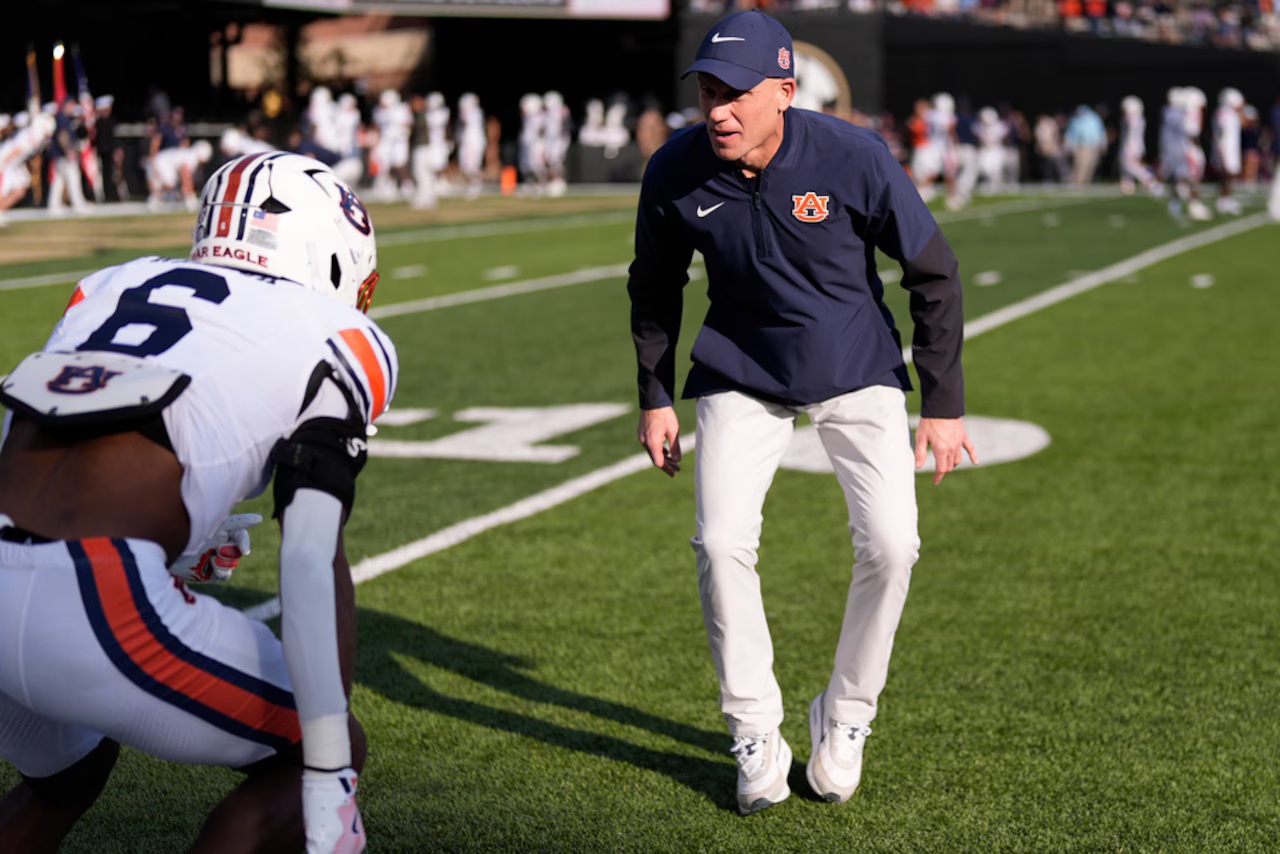
Durkin spoke Wednesday about how important this position group is to the Tigers’ defense and the leap he wants the room to take with spring practice set to begin March 17.
Auburn defensive coordinator DJ Durkin has spent much of the offseason evaluating personnel, building relationships with players, and shaping the defensive identity he hopes will define the Tigers in the coming season. Among the position groups drawing particular attention is the linebacker room, a unit that sits at the heart of Auburn’s defensive structure. When asked recently about the group’s development and mindset, Durkin offered an encouraging assessment, emphasizing both their willingness to learn and their commitment to improvement. According to Durkin, the linebackers have shown a level of coachability that gives him confidence in their potential moving forward, noting that “they’re very coachable and want to do better,” a simple statement that reflects both optimism and expectation within the program.
For a defensive coordinator, the linebacker position often serves as the communication hub of the defense, bridging the gap between the defensive line and the secondary. At Auburn, that responsibility carries even more weight given the physical demands of Southeastern Conference football, where linebackers must be versatile enough to stop the run, cover athletic tight ends, and pressure the quarterback when needed. Durkin understands that success in the SEC requires discipline, awareness, and adaptability, and his early impressions suggest the linebacker room is embracing those challenges. The emphasis on coachability indicates players are responding positively to instruction, corrections, and new schematic concepts being introduced during practices and meetings.
Durkin’s coaching philosophy has always centered on accountability and growth, and those values appear to resonate with Auburn’s linebackers. The willingness to accept coaching is often the first sign that a group is prepared to improve collectively. Rather than resisting changes or relying solely on past experience, Auburn’s linebackers are reportedly leaning into the learning process. That attitude can be particularly important during periods of transition, when new defensive systems or terminology require players to rethink habits and responsibilities. Durkin’s comments suggest the group is not only absorbing information but actively seeking ways to refine their technique and decision-making.
The linebacker room includes a mix of returning contributors and younger players eager to earn larger roles. That blend of experience and emerging talent can create healthy competition, something Durkin has encouraged throughout spring and offseason training sessions. Competition within a position group often accelerates development, as players push one another to improve in drills, film study, and conditioning. Durkin’s praise for the group’s mindset hints at a culture where players understand that improvement is necessary not just individually but for the defense as a whole.
Communication is another area where linebackers play a crucial role, and Durkin has stressed the importance of clarity and confidence in defensive calls. A coachable group tends to respond well to this responsibility, recognizing that small mistakes in alignment or communication can lead to big plays for opposing offenses. By focusing on fundamentals and situational awareness, Auburn’s linebackers are working to become more reliable leaders on the field. Durkin’s observation that they “want to do better” reflects a group that is not satisfied with past performances and is motivated to raise its standard.
Film study has become a key part of that development process. Durkin has spoken about the importance of players understanding not only their assignments but also the broader defensive concept behind each play. When linebackers grasp how their role fits into the overall scheme, they can react faster and play with greater confidence. Coachable players tend to engage more deeply in film sessions, asking questions and seeking clarification. That intellectual engagement often translates into improved performance on the field, something Auburn’s coaching staff hopes to see as preparation continues.
Another factor influencing the linebacker room’s progress is strength and conditioning work during the offseason. SEC defenses must handle physical rushing attacks week after week, and linebackers are often at the center of those battles. Durkin has emphasized building strength without sacrificing speed or agility, ensuring players can move sideline to sideline while still delivering forceful tackles. The group’s willingness to follow coaching guidance in the weight room and on the practice field reinforces the impression of a unit committed to improvement.
Leadership within the linebacker room is also beginning to take shape. Veteran players understand the importance of setting an example for younger teammates, demonstrating preparation habits and maintaining focus during demanding practices. Durkin’s comments suggest that leadership is emerging naturally, supported by players who recognize the responsibility that comes with representing Auburn’s defense. When a position group becomes self-motivated, coaches can focus more on refining strategy rather than correcting effort or attitude.
The broader defensive goals for Auburn this season depend heavily on linebacker performance. Stopping the run consistently, improving third-down efficiency, and creating turnovers all require linebackers who can read plays quickly and execute assignments with precision. Durkin’s confidence in their coachability indicates he believes the group is moving in the right direction, even if there is still work to be done. Improvement rarely happens overnight, particularly in a conference as competitive as the SEC, but a receptive mindset can accelerate progress.
As preseason preparation continues, the linebacker room will face additional tests, including scrimmages designed to simulate game situations. These moments often reveal how well players apply what they have learned in practice. Durkin will be watching for communication, positioning, and decision-making under pressure. Coachable players tend to respond well to these challenges, viewing mistakes as opportunities to learn rather than setbacks. That approach aligns with Durkin’s emphasis on continuous development.
The energy surrounding Auburn’s defense reflects a program focused on growth and resilience. Durkin’s comments about the linebacker room highlight more than just technical improvement; they point to a shared commitment to becoming better every day. In college football, where rosters change frequently and new systems are introduced, adaptability can determine whether a defense struggles or succeeds. Auburn’s linebackers appear to understand that reality and are working to meet the expectations placed on them.
Ultimately, Durkin’s evaluation of the linebacker room provides a glimpse into the culture being built within Auburn’s defense. Coachability, effort, and the desire to improve are qualities that often lead to long-term success. While the season will provide the true measure of progress, the early signs suggest a group determined to grow into its role. If that mindset continues, Auburn’s linebackers could become one of the defining strengths of the Tigers’ defense, reflecting the steady influence of a coordinator who values preparation, communication, and the willingness to learn.