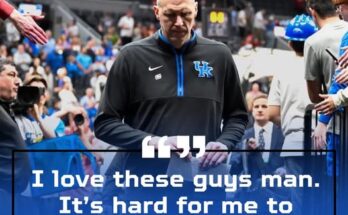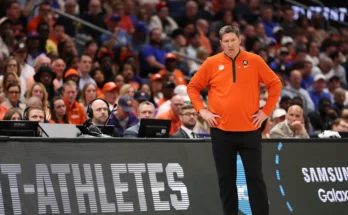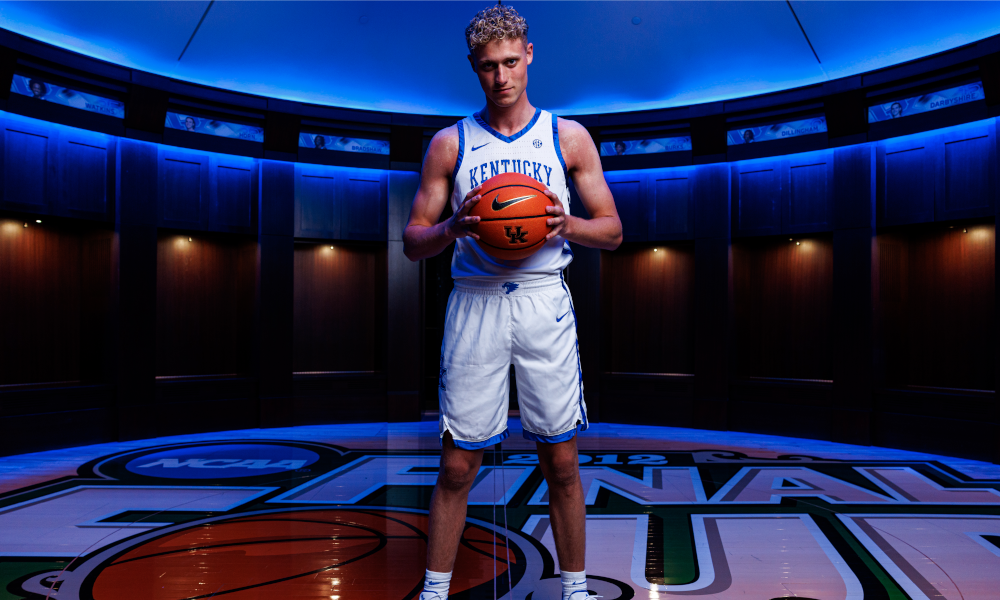
Collin Chandler knows there will be criticism of Mark Pope after Kentucky’s loss, but talks about his love and belief in him.
In the aftermath of a tough loss, emotions often run high, and criticism tends to follow—especially when a program as prominent as Kentucky Wildcats men’s basketball falls short of expectations. For Collin Chandler, however, the conversation surrounding head coach Mark Pope goes far beyond the noise. While acknowledging that scrutiny is inevitable, Chandler made it clear that his belief in his coach remains unwavering, offering a perspective rooted in trust, respect, and a deeper understanding of what happens behind the scenes.
Following the loss, Chandler did not shy away from the reality that criticism would come. At a program like Kentucky, where success is not just expected but demanded, every defeat is magnified. Fans, analysts, and media voices are quick to evaluate decisions, performances, and leadership. Chandler understands this environment, recognizing that coaching at such a high level brings immense pressure. Yet rather than adding to the criticism, he chose to stand firmly in support of Pope.
For Chandler, his belief in Pope is built on more than just game-day outcomes. It stems from daily interactions, preparation, and the culture that Pope has established within the team. Players often see a side of coaching that the public does not—hours of film study, detailed planning, and constant communication aimed at helping them improve. Chandler emphasized that Pope’s commitment to his players and his passion for the program are qualities that cannot be overlooked when evaluating his leadership.
The relationship between a player and coach is one of the most important dynamics in sports, and Chandler’s comments highlight the level of trust that exists within Kentucky’s locker room. Even in the face of adversity, that trust can serve as a stabilizing force. Chandler’s willingness to publicly express his support sends a strong message about the unity within the team, suggesting that the players remain aligned with their coach despite outside criticism.
Chandler also pointed to the bigger picture, noting that one loss does not define a season or a coaching tenure. In college basketball, where schedules are demanding and competition is fierce, setbacks are inevitable. What matters most is how a team responds, and Chandler believes that Pope has the ability to guide Kentucky through difficult moments and keep the program moving forward.
His comments reflect a level of maturity and perspective that goes beyond individual performance. Instead of focusing solely on what went wrong in the loss, Chandler chose to emphasize belief and resilience. That mindset is often what helps teams navigate challenging stretches, as confidence in leadership can translate into improved performance on the court.
For Mark Pope, having players like Chandler publicly support him can be significant. In high-pressure environments, internal belief can counterbalance external criticism. It reinforces the idea that while opinions may vary outside the program, the foundation within the team remains strong.
As the season continues, Kentucky will undoubtedly face more challenges, and the spotlight on Pope will remain intense. But voices like Chandler’s provide a reminder that the story is not solely defined by wins and losses. It is also shaped by relationships, trust, and the collective belief within the team.
In the end, Chandler’s message was clear: criticism may come and go, but his respect and confidence in his coach are constant. That belief could prove to be a key factor as Kentucky looks to regroup, respond, and continue its pursuit of success.