Former Tennessee Vols basketball standout Tobias Harris goes viral for NSFW comments directed at fans

Former Tennessee Vols basketball standout Tobias Harris goes viral for NSFW comments directed at fans

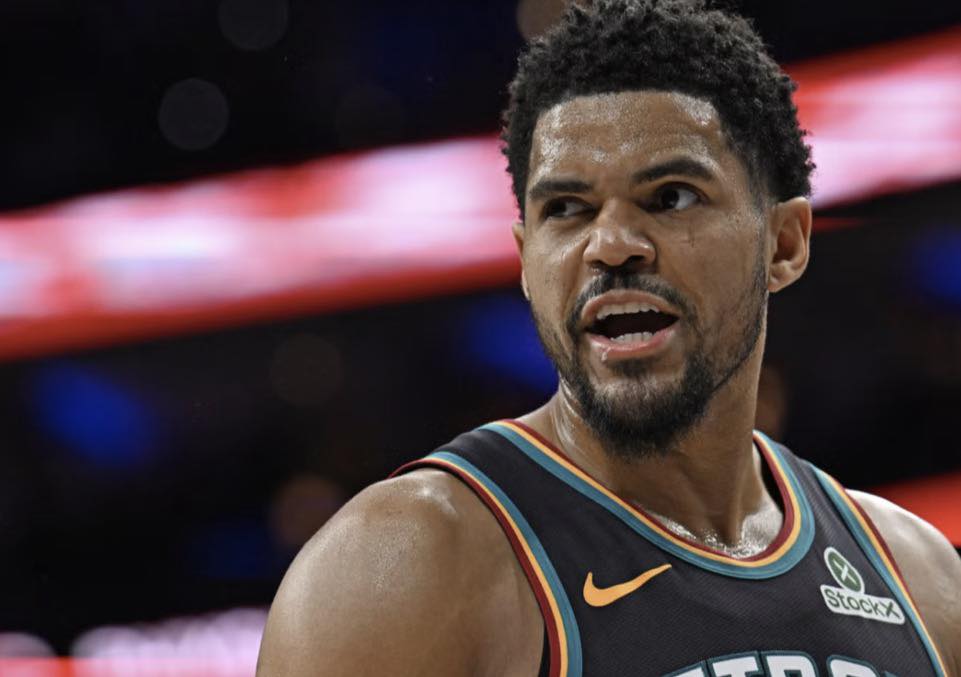
Detroit Pistons forward Tobias Harris, a former Tennessee Vols standout, went viral on Saturday for some NSFW comments directed toward Philadelphia 76ers fans. Harris and the Pistons beat the 76ers 116-93.

Former Tennessee Vols basketball star Tobias Harris went viral on Saturday during the Detroit Pistons’ 116-93 win over the Philadelphia 76ers.

Harris, who is in his second stint with the Pistons, was captured by cameras appearing to tell 76ers fans to, “get ready for the f—ing play-in”.

The Pistons are currently the No. 1 seed in the Eastern Conference. The 76ers, meanwhile, are currently the No. 7 seed in the Eastern Conference, which has them lined up for now to play the Charlotte Hornets in the play-in round.

Harris has some history with the 76ers, as he spent five years with Philadelphia before returning to Detroit in 2024.

The former Vol received a max contract from the 76ers in 2019, but Philly fans never felt like Harris met expectations (even though he averaged 17.6 points per game during his time with the 76ers).

Former Tennessee Volunteers basketball standout Tobias Harris has recently gone viral after a series of NSFW remarks directed at fans sparked widespread attention and debate across social media. Known for his professionalism and steady presence both on and off the court, Harris’ comments came as a surprise to many, quickly turning into a trending topic among basketball communities and beyond.

The situation unfolded when Harris engaged with fans in a moment that appeared to escalate unexpectedly. While athletes often interact with supporters in a lighthearted or competitive tone, this instance crossed into territory that many considered inappropriate. The nature of the comments led to a mix of reactions, with some expressing disappointment while others viewed it as a rare moment of unfiltered emotion in an era where players are often expected to maintain a carefully managed public image.

For Harris, who has built a reputation as a respected veteran in the NBA, the incident stands out precisely because it contrasts with how he is typically perceived. Over the years, he has been known for his consistency, leadership, and thoughtful approach to the game. Moments like this, however, highlight the reality that even the most composed athletes can find themselves in situations where emotions take over, especially in the fast-paced and highly interactive environment of social media.

The viral nature of the exchange also speaks to the broader dynamics between athletes and fans today. Platforms have created a space where direct communication is not only possible but expected. While this accessibility can strengthen connections, it also opens the door to misunderstandings and conflicts. When boundaries are crossed—whether intentionally or not—the response can be immediate and widespread, amplifying the situation far beyond its original context.

Reactions to Harris’ comments have varied widely. Some fans have criticized the tone of the remarks, arguing that public figures carry a responsibility to maintain a certain level of professionalism, regardless of the circumstances. Others have taken a more nuanced view, suggesting that athletes are human and should not be held to unrealistic standards of perfection. This divide reflects an ongoing conversation about accountability, authenticity, and the pressures that come with being in the public eye.

There is also the question of intent. Without full context, it can be difficult to determine whether the remarks were made in frustration, humor, or as a response to provocation. Social media interactions often lack the nuance of face-to-face communication, making it easier for messages to be misinterpreted. Regardless of intent, however, the impact remains significant, as viral moments tend to shape public perception in lasting ways.

For Harris, the focus will likely shift toward how he responds moving forward. Athletes in similar situations often address the issue directly, offering clarification or acknowledging the reaction it has generated. How he chooses to handle the aftermath could play a role in how the incident is ultimately viewed, both by fans and within the broader basketball community.

At a larger level, this moment serves as a reminder of the challenges athletes face in navigating modern communication. The line between personal expression and public responsibility is not always clear, and even a brief interaction can carry significant consequences. As the conversation continues, it highlights the evolving relationship between players and fans, one that is shaped by immediacy, visibility, and the ever-present possibility of going viral.

Leave a Reply

Your email address will not be published. Required fields are marked *