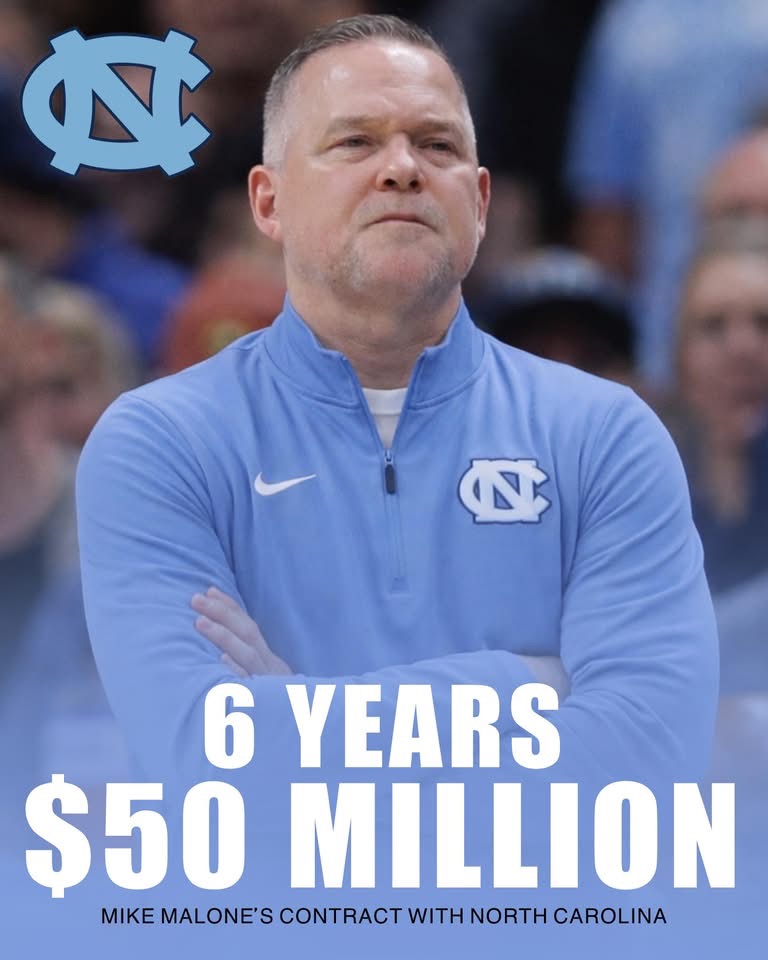
Mike Malone is reported to get $8.33 million per year at North Carolina making him the second-highest paid coach in college basketball .
Mike Malone’s reported $8.33 million annual salary at North Carolina has sparked widespread discussion across the college basketball landscape, not only because of the sheer size of the figure but also because it positions him as the second-highest paid coach in the sport. Such a contract reflects the growing financial power of elite college basketball programs and the immense expectations placed on coaches to deliver consistent success, both on and off the court. In an era where college athletics increasingly mirrors the business dynamics of professional sports, salaries like Malone’s highlight just how valuable top-tier coaching leadership has become.
The decision to invest heavily in Malone underscores North Carolina’s commitment to maintaining its status as a premier basketball program. With a storied history, passionate fan base, and high expectations for championships, the university appears willing to allocate significant resources to ensure it remains competitive at the highest level. Coaches at this tier are not just strategists; they are program builders, recruiters, public figures, and leaders responsible for shaping the culture of their teams. A salary of $8.33 million suggests that Malone is expected to excel in all these areas while also delivering deep tournament runs and potentially national titles.
From a broader perspective, Malone’s contract also reflects the escalating arms race in college athletics. As television deals grow larger and sponsorship revenues increase, universities are generating more income from their athletic programs. This financial boom has trickled down into coaching salaries, facilities, and recruiting budgets. Top coaches are now compensated in a way that rivals many professional leagues, illustrating the blurred lines between amateur and professional sports. For schools competing at the highest level, failing to keep up financially could mean losing top coaching talent to rival programs.
At the same time, such a high salary inevitably raises questions about priorities within collegiate institutions. Critics argue that paying a coach millions of dollars annually contrasts sharply with the traditional mission of universities as centers of education. Others point out the ongoing debates around athlete compensation, noting that while coaches and administrators benefit financially, players themselves have historically received limited direct compensation beyond scholarships, though recent changes in name, image, and likeness rules have begun to shift that landscape.
For Malone, the pressure that comes with this level of compensation will be immense. Expectations will extend beyond regular season success to include conference dominance and deep postseason achievements. Every decision, from recruiting choices to game-day strategies, will be scrutinized closely by fans, analysts, and university stakeholders. In many ways, the salary is both a reward for past accomplishments and a bet on future success.
Ultimately, Malone’s reported earnings serve as a symbol of where college basketball stands today. The sport has evolved into a high-stakes industry where elite coaches command extraordinary value, and universities are willing to invest heavily to secure a competitive edge. Whether this trend continues or faces pushback remains to be seen, but for now, it is clear that coaching at the highest level of college basketball is as lucrative and demanding as ever.