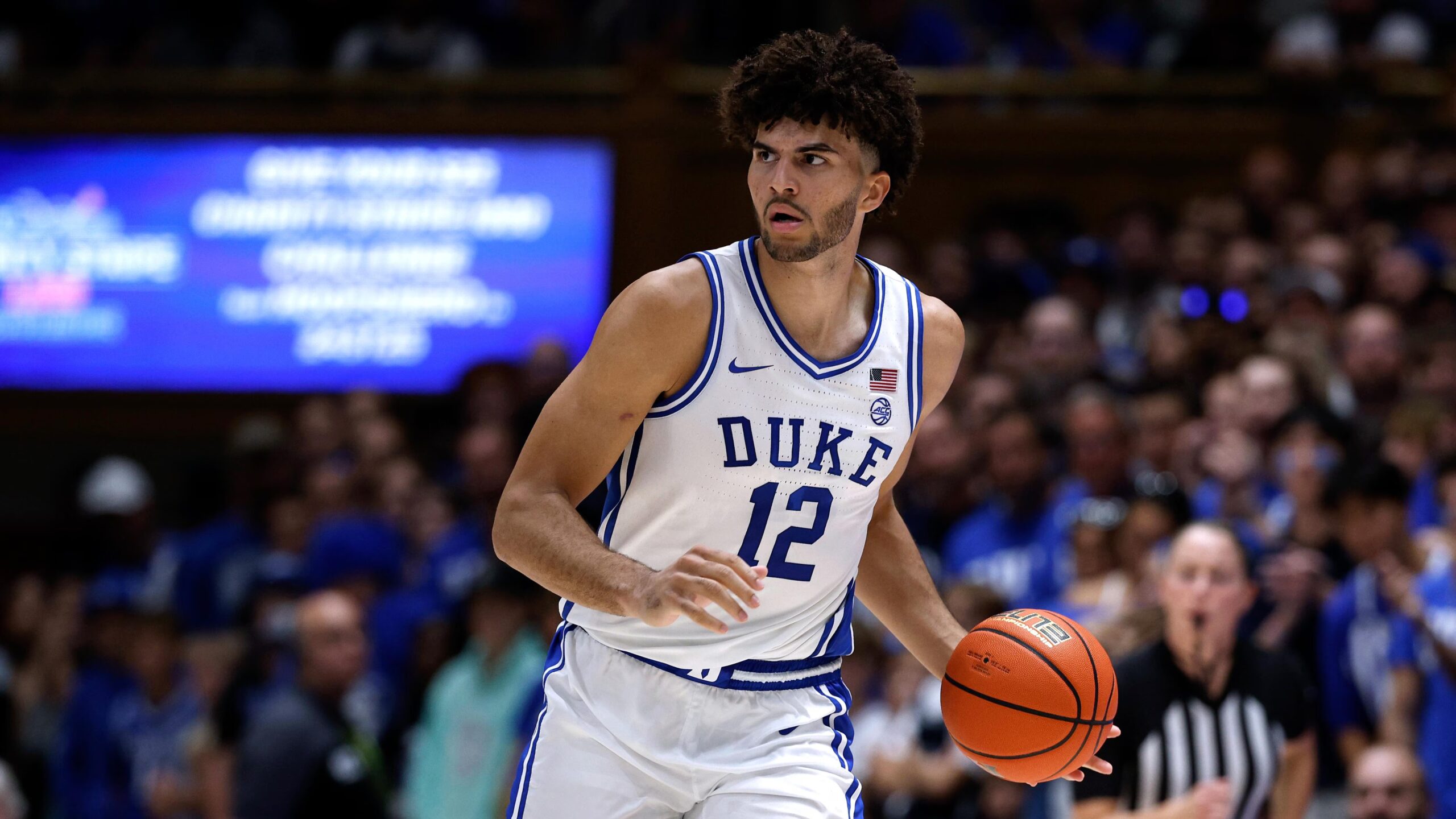
The Duke Blue Devils men’s basketball always seem to have someone singled out when they fall short of winning a trophy—last season it was Cooper Flagg facing the criticism, and now this season the spotlight has shifted to Cameron Boozer.
The Duke Blue Devils men’s basketball always seem to find themselves at the center of intense scrutiny when a season ends without a championship, and with that scrutiny often comes a familiar pattern—someone is singled out as the face of the disappointment. Last season, much of that criticism fell on Cooper Flagg, a young star whose immense expectations made him an easy target when the ultimate goal wasn’t achieved. Now, as another season concludes without a trophy, the spotlight has shifted to Cameron Boozer, continuing a cycle that says as much about the program’s standards as it does about the pressures placed on its players.
At a place like Duke, excellence is not just expected—it is demanded. The program’s history, filled with championships and iconic performances, has created a benchmark that few teams in college basketball can match. With that level of prestige comes an equally high level of accountability, but it also brings a tendency to simplify complex outcomes into individual narratives. When a team falls short, it becomes easier to point to a single player rather than examine the broader picture of what went right and what didn’t.
For players like Flagg and Boozer, this reality is both a testament to their talent and a reflection of the burden they carry. Being among the most highly regarded players means being placed under a microscope, where every performance is analyzed and every misstep magnified. Flagg’s experience last season illustrated how quickly admiration can turn into criticism when expectations are not met. Despite his contributions and development, the narrative often centered on what he didn’t achieve rather than what he brought to the team.
Now, Boozer finds himself in a similar position. As a focal point of the team, his performances naturally draw attention, but so do the results. When Duke falls short of a championship, the spotlight intensifies, and the conversation shifts toward individual accountability. It is a pattern that repeats itself not because of any one player’s shortcomings, but because of the environment that surrounds elite programs. Success is shared, but failure is often personalized.
What makes this dynamic particularly challenging is that basketball, at its core, is a team sport. Wins and losses are rarely determined by a single player, especially at the highest level of competition. Factors such as coaching decisions, team chemistry, injuries, and the strength of opponents all play significant roles in shaping outcomes. Yet, these complexities are often overshadowed by the simplicity of assigning blame to a recognizable figure.
There is also a broader cultural element at play. In today’s sports landscape, narratives are driven by constant discussion, analysis, and social media engagement. Fans and commentators alike search for explanations, and individual stories become the easiest way to frame those discussions. For Duke, a program that consistently attracts top talent and national attention, this effect is amplified.
Despite the criticism, it is important to recognize what players like Flagg and Boozer represent. They are not just individuals carrying the weight of expectations; they are key pieces in a larger system, contributing to a program that remains one of the most competitive in the nation. Their journeys are defined not only by the outcomes of a single season but by their growth, resilience, and ability to handle the pressures that come with playing at Duke.
In the end, the tendency to single out one player says as much about the expectations surrounding Duke basketball as it does about the players themselves. It reflects a culture where anything less than a championship feels like a missed opportunity. But within that reality lies a deeper truth: success and failure are shared experiences, shaped by many factors, and no single player should bear the full weight of either.