March Madness and the mind: Dr Michael Gerson on pressure, mistakes, and the psychology of high-stakes sport
From a late-game mistake in Duke’s dramatic loss to UConn to the growing pressure of money, social media, and expectation, sport psychology expert Dr Michael Gerson explains what pressure does to athletes — and how they can respond when everything is on the line.
The Elite Eight contest between Duke and the University of Connecticut (UConn) on Sunday (29 March) produced one of the most jaw-dropping finishes of the 2026 men’s March Madness collegiate basketball tournament in the U.S., with UConn erasing a 19-point deficit, culminating in Braylon Mullins draining an audacious 30-foot shot to snatch victory for the Huskies in a play that instantly went viral.
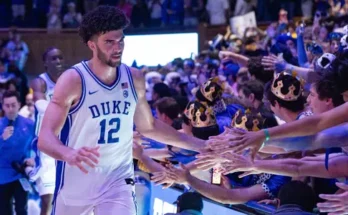
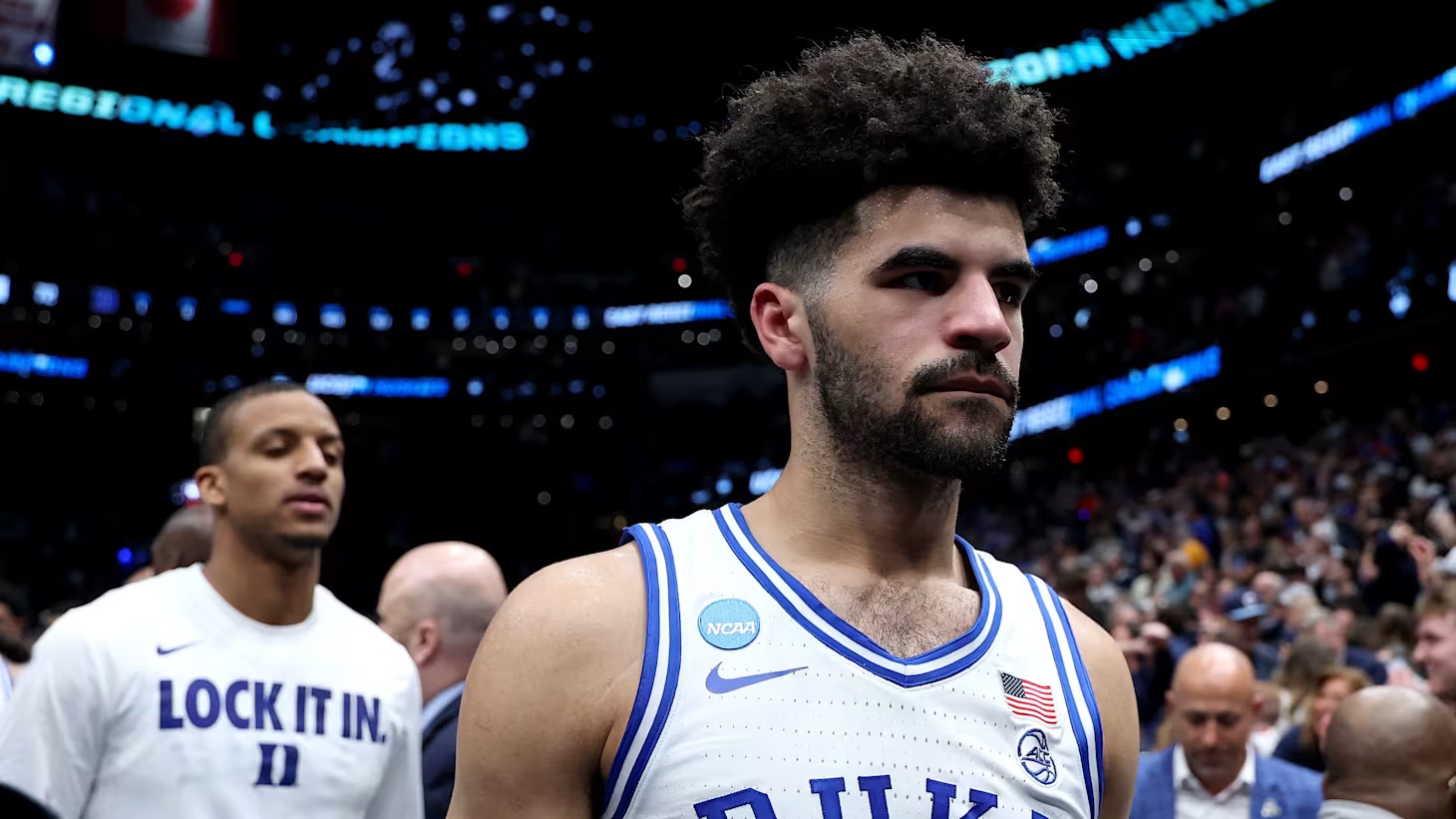
But for all the attention on Mullins’ three-pointer — and the delirious celebrations that followed inside Capital One Arena in Washington, D.C. — there was an equally intense spotlight on Duke’s Cayden Boozer, whose errant pass in the dying seconds was stolen, setting up the final basket.
Speaking to reporters afterwards, Boozer struggled to hold back tears.
“I ruined our team’s season,” the Duke freshman said. “That’s the best I can put it.”
It was a devastating admission, and one that many athletes who have competed in high-stakes environments will recognise. But how does a player move on from a moment like that — especially one carrying the expectations that surround Boozer, whose twin brother Cameron is projected to be a high lottery pick in the 2026 NBA Draft, and whose father Carlos played in the NBA and won Olympic gold with Team USA at Beijing 2008.
For Dr Michael Gerson, a clinical psychologist and sport and performance psychology specialist, the starting point would be simple: do not try to brush the moment aside.
“I wouldn’t minimize it at all,” Gerson told Olympics.com when asked how he would respond to a player in Boozer’s position. “I’d tell him to feel it, to wear it, to not push it away.”
As March Madness heads into Final Four weekend (4-5 April), it is a reminder that the NCAA tournament is not only a test of talent, but of the mind.
More than the next possession
Gerson knows the mental terrain of high-pressure performance better than most. A clinical psychologist with a doctorate in psychology and a speciality in sport and performance psychology, he helped create the U.S. Army Center for Enhanced Performance, later worked with Special Forces operators, and spent four years as director of sports psychology for Major League Baseball’s Seattle Mariners before moving into academia and performance consulting.
For Gerson, one of the biggest misconceptions about March Madness is that the pressure begins and ends with the scoreboard. It does not. Today’s college athletes are carrying far more than the next play.
“They’re not just stepping on the court, playing for a win,” he said. “They have to deal with identity … large expectations … potential financial opportunities of generational wealth, and then just the legacy of it all really sitting on their shoulders.”
The modern college player is not only trying to win a game. There are name, image, and likeness (NIL) deals to navigate, a transfer portal that can upend careers, coaching changes, NBA draft chatter, school demands and the constant scrutiny of social media. A mistake is no longer just a mistake; it can be clipped, replayed and judged endlessly within minutes.
That is why Gerson is fascinated not only by individual stars, but by the support systems around them. He speaks repeatedly about teams “clicking at the right time”, communicating well, calming one another down and trusting the group instead of trying to carry the whole occasion alone.
“That kind of composure is really contagious,” he said.
Process over outcome
Gerson saw that principle in UConn’s comeback against Duke. What struck him was not only the shot-making, but the way head coach Dan Hurley and his staff framed the challenge at halftime. Rather than obsess over a 19-point deficit, the task became smaller and more manageable: win the next stretch, then the next, and resist the urge to scoreboard-watch.
That distinction — process over outcome — sits at the heart of how Gerson explains pressure.
“When we’re performing at our best, it’s rhythmic, it’s fluid, we’re fully engaged in the moment,” he said. That is the mental state athletes often describe as flow, the zone, or simply being in rhythm. The danger comes when the mind moves elsewhere: back to the last mistake or ahead to everything that might happen next. “When we do that, then things really start to get slow,” he said.
How athletes reset
So what can an athlete do when that spiral starts?
Gerson tends to work from two broad approaches. One is more cognitive: a direct response to negative self-talk. He teaches a framework known as the “five Rs” — recognise the thought, rupture it, respond with a cue, relax through breath, then replace it with something more useful.
The other approach is more mindful. Rather than battling the thought, the athlete stops, takes a breath, observes what is happening mentally and physically, then lets it pass without giving it more fuel.
He does not believe athletes need to pick one camp and ignore the other.
“Why throw one away?” he said. “Build room for both.”
In other words, the goal is not to produce one universal method, but to help each athlete find a reset that works for them, then practise it enough that it becomes available when the noise is loudest.
Why the conversation is changing
It is also why Gerson believes athletes are speaking more openly than ever about anxiety, stress, and mental wellbeing. In his view, that shift is not a trend. It is a response to how demanding modern sport has become.
“It’s not just about the game anymore,” he said.
Earlier in his career, Gerson estimated that roughly 90 per cent of his work was focused on performance and 10 per cent on counselling. Now, he says, the balance looks more like 60-40, not always in a clinical sense, but in the everyday realities athletes carry into competition: sleep, relationships, grief, academics, identity, adjustment, and the general emotional wear and tear of life.
The encouraging part, he said, is that the culture is moving in the right direction. More organisations are investing in mental health staff. More athletes have the language to describe what they are feeling. More coaches understand that wellbeing is not separate from performance, but closely tied to it.
Gerson was also keen to stress that March Madness should not be reduced to the men’s bracket alone. The women’s tournament, too, is full of athletes navigating intense expectations, different pressures, and the same need for composure when the stakes rise.
Lessons beyond basketball
One of Gerson’s guiding ideas, borrowed from his late mentor, is simple: performance is performance is performance.
The same principles that help an athlete steady themselves in a one-possession game can help a surgeon in an operating theatre, a teacher in a classroom, a student in an exam hall, or a parent trying to stay calm in a difficult moment.
What changes is the setting. What does not change is the challenge: understanding what your best state looks like, noticing when you have drifted from it, and having a reliable way to return.
Gerson said many people can tell you they had a good day, but struggle to explain why. The work begins there. What did your mind look like? What was your body doing? What changed when things became difficult? The more clearly someone can answer those questions, the more likely they are to return to that state.
That is part of what makes Final Four weekend so compelling. Fans will watch for the shot-making, the upsets and the raw theatre of a single-elimination tournament. Gerson will be watching for something else too: body language after a turnover, the tone of a huddle, the teammate who settles everyone down, the player who misses one shot and stays free enough to take the next.
Because when everything is on the line, the difference is not always who is most talented.
Sometimes, it is who can stay present the longest.