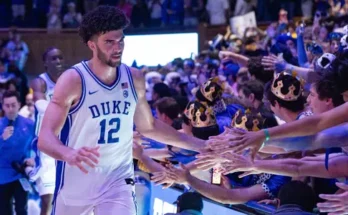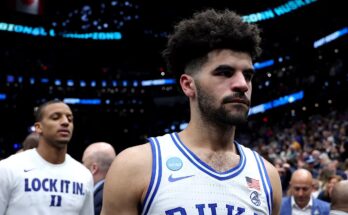
Isaiah Evans, a member of the Duke Blue Devils men’s basketball, turned down a $1 million sponsorship offer from a major agricultural company in North Carolina, stating, “I was raised here and know what this state stands for, and I refuse to benefit from companies that take advantage of local farmers.”
Isaiah Evans, a standout player for the Duke Blue Devils men’s basketball, has sparked a powerful conversation that extends far beyond basketball after reportedly turning down a $1 million sponsorship deal from a major agricultural corporation based in North Carolina. In an era where name, image, and likeness opportunities have transformed college athletics, such a decision stands out not only for its financial implications but for the message behind it. Evans made it clear that his choice was rooted in principle, explaining that he could not accept money from a company he believes exploits farmers in the very state he calls home.
The significance of this decision cannot be overstated. For many college athletes, NIL deals represent life-changing opportunities, offering financial security and exposure that were once unimaginable at this stage of their careers. Turning down a deal of this magnitude requires not just confidence, but a strong sense of identity and purpose. Evans’ stance suggests that for him, values outweigh immediate financial gain, a perspective that resonates deeply in a world often driven by profit and personal advancement.
Growing up in North Carolina, Evans has a personal connection to the communities affected by agricultural practices in the region. Farming is not just an industry in the state; it is a way of life for many families, passed down through generations and deeply tied to local culture and economy. By referencing his upbringing, Evans highlighted that his decision was not made in isolation but was shaped by his understanding of these communities and the challenges they face. His words reflect a level of awareness that goes beyond the typical scope of an athlete’s public persona.
What makes this situation even more compelling is the platform Evans occupies. As a player at Duke, he is part of a program that consistently draws national attention. Every move he makes, both on and off the court, is amplified by that visibility. By taking a stand, he has used that platform to bring attention to an issue that might otherwise remain in the background. It is a reminder that athletes today are not just competitors but also voices capable of influencing broader conversations.
Reactions to Evans’ decision have been varied, reflecting the complexity of the issue. Many have praised him for his integrity, viewing his choice as a rare example of someone prioritizing ethics over financial gain. In a time when endorsement deals are often seen as essential stepping stones, his willingness to walk away from a significant opportunity has been interpreted as a bold and admirable move. Supporters argue that this kind of decision sets a powerful example, demonstrating that success does not have to come at the expense of one’s values.
At the same time, others have questioned whether turning down such an opportunity is practical, especially considering the short window many athletes have to capitalize on their earning potential. College careers are often brief, and the financial landscape can change quickly. From this perspective, the decision can be seen as a risk, one that prioritizes long-term principles over immediate benefit. Yet, even among those who question the practicality, there is often an acknowledgment of the courage it takes to make such a choice.
The broader implications of Evans’ stance extend into the evolving role of NIL in college sports. As athletes gain more control over their personal brands, they are also faced with more complex decisions about who they align themselves with. It is no longer just about the size of the deal, but about the values associated with it. Evans’ decision highlights the idea that endorsements are not merely transactions but partnerships that reflect an athlete’s identity and beliefs.
There is also a cultural dimension to consider. In recent years, there has been growing awareness around issues of corporate responsibility and the impact of business practices on local communities. Evans’ statement taps into that broader conversation, connecting the world of college athletics to larger societal concerns. By refusing to profit from a company he believes harms farmers, he has aligned himself with a perspective that prioritizes community well-being over corporate gain.
For Duke, this moment adds another layer to the narrative surrounding the program. While the focus is often on performance and results, moments like this shift attention to character and leadership. Evans’ decision reflects not just on him as an individual, but on the environment that has shaped him. It suggests a culture that allows players to think critically, to form their own opinions, and to stand by them even when it comes at a cost.
Looking ahead, it will be interesting to see how this decision influences Evans’ path, both on and off the court. While he may have turned down one opportunity, it is likely that others will emerge, potentially from organizations that align more closely with his values. In fact, his stance may even enhance his appeal to certain brands, particularly those that emphasize social responsibility and ethical practices. In this way, the decision could have long-term benefits that extend beyond the immediate financial loss.
Ultimately, Isaiah Evans’ choice is about more than a sponsorship deal. It is about identity, responsibility, and the kind of example he wants to set. In choosing principle over profit, he has sparked a conversation that reaches beyond sports, touching on issues of ethics, community, and the power of individual decisions. Whether one agrees with his choice or not, it is difficult to ignore the impact of a young athlete willing to stand firm in his beliefs, even when faced with a million-dollar offer.